
If you run a business in Miami, your advertising budget isn’t “marketing money.” It’s operating money. You spend it because you need leads, bookings, calls, orders—something measurable that keeps the business moving.
That’s why the Google Ads vs Facebook Ads question shows up so often. It’s not academic. It’s a cashflow decision.
The problem is that most advice online treats these platforms like competing products, as if one is universally “better.” In reality, Google and Facebook solve different problems. One captures existing demand. The other creates and shapes demand. The better choice depends on your service, your timeline, your sales process, and whether you can track what happens after the click.
In this guide, you’ll get a clear decision framework built for Miami businesses: where each platform shines, where it wastes money, and how to choose without gambling your budget. We’ll also point out the moments where hiring the right operator matters more than the platform itself.
The Fast Answer (If You Only Read One Section)
Choose Google when people are already searching for what you sell—especially when the need is urgent or time-sensitive. In those cases, google paid search lets you show up at the exact moment the customer is asking for help.
Choose Facebook when you need awareness, demand creation, or consistent retargeting—especially when your service benefits from visuals, social proof, and repeated exposure.
For many Miami businesses, the smartest approach is staged:
- Start with a focused pay per click campaign on Google to capture high-intent buyers.
- Add Facebook retargeting and selective prospecting to keep your brand in the decision set.
- Improve landing pages and follow-up so you stop paying for leads that never convert.
This is where execution matters. miami ppc services work when the traffic lands on the right page, the tracking is clean, and the follow-up happens fast.
What Each Platform Is Built to Do (No Hype)
Google Ads: Demand Capture
Google is not a social platform. It’s an intent engine. People search because they want a solution—often right now.
With google paid search, you’re not trying to convince someone they have a problem. You’re trying to be the best answer when they’ve already decided to look.
This is why the math can be straightforward: you pay per click to get in front of motivated searchers. The real question becomes: are your keywords truly high-intent, and does your landing page close the loop?
When Google works, it works because the buyer is already in motion.
Facebook Ads: Demand Creation + Retargeting
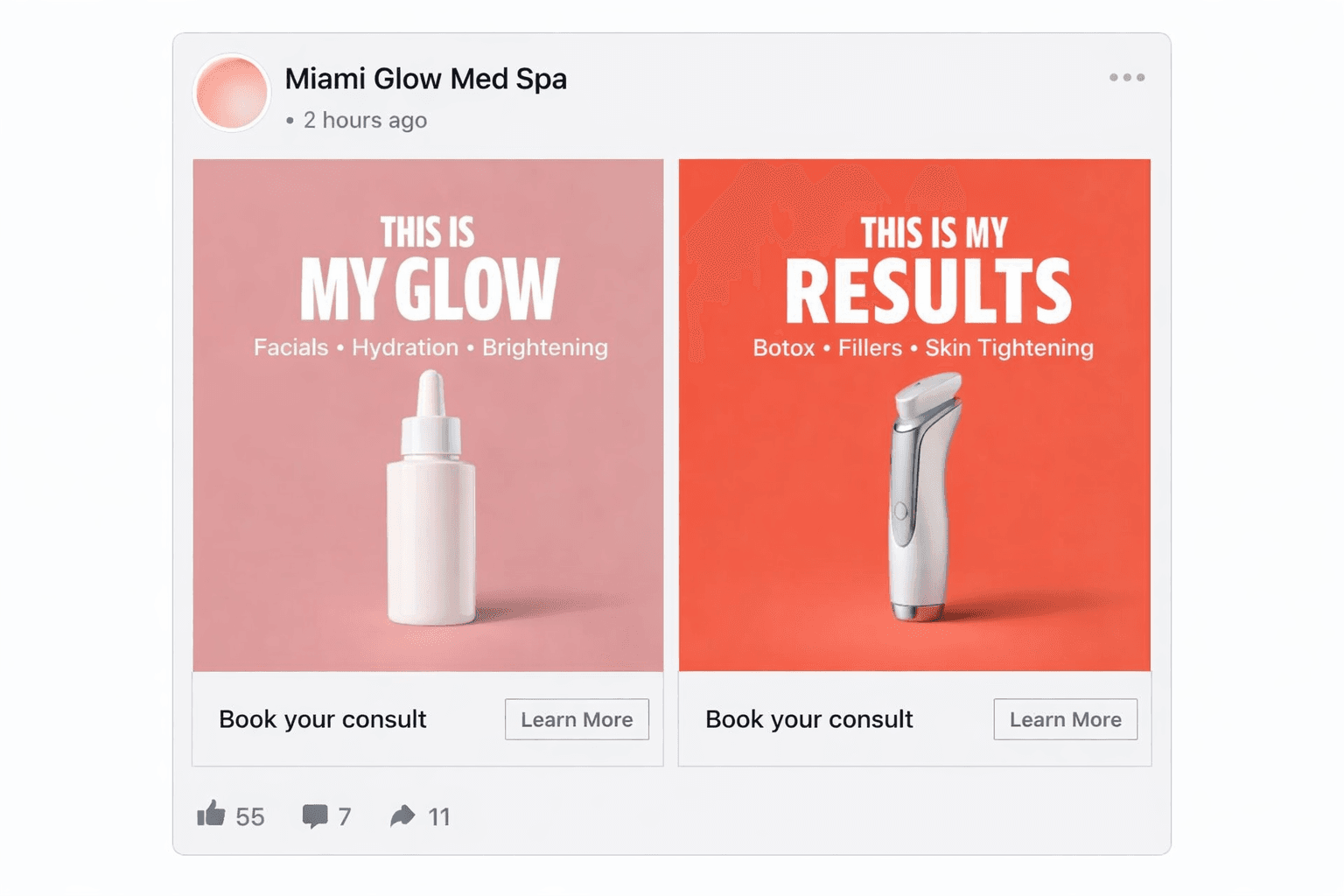
Facebook (and Instagram) is different. People are not searching for your service. They’re scrolling.
That means your ad has to earn attention, create curiosity, and do enough work to make the next step feel worth it. Facebook shines when you have:
- a visually understandable offer
- credible proof (reviews, results, social signals)
- a reason to act now (not fake urgency—real timing)
It also shines at retargeting. If someone visited your site, clicked a video, engaged with your posts, or started to compare options, Facebook can keep your brand present while they decide.
The Miami Factor: Why ROI Can Feel Harsh Here
Miami is competitive in a way many markets aren’t. People comparison-shop quickly. They judge credibility quickly. And they have a lot of options.
That changes the rules.
- On Google, competition can drive up costs and make sloppy keyword choices expensive.
- On Facebook, weak creative and weak landing pages get ignored fast.
This is why businesses sometimes jump from one platform to the other without fixing the real problem: the website doesn’t convert, or the follow-up is slow, or the offer isn’t clear enough.
Many advertising firms in miami can buy clicks. Fewer can build the path from click to customer.
The Decision Framework (A Simple Way to Choose)
Answer these five questions honestly:
- Is demand already obvious? Are people searching for what you sell today?
- Is the need urgent or considered? Emergency services behave differently than high-consideration services.
- What is your average ticket and margin? Some offers can’t carry high acquisition costs.
- Do you have proof assets? Reviews, real photos, case outcomes—anything you can stand behind.
- Can you track outcomes? Calls, forms, booked appointments, purchases—what happens after the click.
If you sell a service that closes on the phone or requires multiple touches, you’re dealing with a pipeline vs funnel issue. Some businesses don’t convert in a single step. The ad platform doesn’t change that; your process has to account for it.
When Google Ads Wins (Miami Use Cases)
Google is usually the first place to invest when:
- People search with urgency (repairs, appointments, immediate help)
- Your service is clearly understood and easy to match to keywords
- You can answer calls quickly and close efficiently
- Your offer is strong enough to compete
A focused Google approach works best when it is intentional, not broad.
What “intentional” looks like
- Campaigns are built around high-intent terms.
- Landing pages match the search exactly.
- Call tracking is set up so you know what actually drives revenue.
- Negative keywords prevent wasted spend.
This is where a capable miami ppc agency earns results. The platform is powerful, but it punishes sloppy targeting.
A strong ppc ad agency will also tell you the truth when Google is not the best first channel, because not every business is a clean fit for search.
When Facebook Ads Wins (Miami Use Cases)
Facebook usually wins first when:
- Your service benefits from visuals and social proof
- People don’t search for you until you give them a reason
- You have a compelling offer and fast lead response
- You want to build awareness in a crowded market
Facebook’s advantage is its ability to make your business feel familiar before someone is ready to buy.
What “Facebook done right” looks like
- Ads are built around proof and clarity, not vague branding.
- You use video or image creative that shows real work or real outcomes.
- You retarget website visitors and engaged users.
- Your lead follow-up is fast.
If you’re comparing miami ppc services, make sure the provider can support both demand capture and demand creation. They require different thinking.
The Budget Reality: Where Miami Businesses Waste Money
Most ad budgets don’t fail because the platform is wrong. They fail because the path after the click is weak.
Here are the most common waste patterns:
- Sending traffic to a generic page
- The ad promises something specific; the page feels vague.
- No call tracking / no conversion tracking
- If you can’t see which clicks produce revenue, optimization becomes guesswork.
- Slow lead response
- In Miami, speed often beats “better.” If you respond late, you lose.
- Testing too many variables at once
- You can’t learn when everything changes every week.
- Ignoring the economics
- You pay per click, but you get paid per customer. If your close rate is weak, your ads look “expensive” even when targeting is correct.
The “Often Both” Strategy (How to Combine Without Doubling Waste)
A blended plan usually outperforms an either/or decision—if it’s sequenced correctly.
Phase 1: Capture existing demand
Start with Google. Build a clean, focused campaign around services people already search for.
Phase 2: Add retargeting and controlled prospecting
Use Facebook to stay present while buyers compare. Retarget visitors and build familiarity.
Phase 3: Improve conversion and reduce dependence
As your landing pages and follow-up improve, your cost per acquisition drops, and both platforms become more efficient.
At this stage, some businesses also add long-term visibility work. For local businesses, local seo miami can reduce reliance on paid traffic over time by building consistent organic presence. But SEO is not an instant substitute for ads.
If you want the compounding visibility layer built alongside ads, click here.
Choosing the Right Partner (What to Ask Before You Spend)
A platform is only as effective as the operator.
Before you hire anyone, whether you’re talking to advertising firms in miami or a solo freelancer, ask these questions:
- How will you track calls, forms, and booked outcomes?
- What is the plan for landing pages?
- How will you report success beyond clicks and impressions?
- What happens when performance stalls—what levers do you pull first?
- How do you reduce waste and prevent irrelevant clicks?
If your goal is to consolidate services under one roof, a marketing agency full service can be efficient, but only if they can explain their strategy clearly and tie it to business outcomes.
FAQs
Which is cheaper: Google Ads or Facebook Ads?
Cheaper is the wrong target. The right question is: which produces profitable customers at your margins? Facebook clicks can be less expensive, but they often require more nurturing because the buyer wasn’t searching. Google clicks can cost more, but they may convert faster when intent is high. Either platform can be expensive if tracking, landing pages, or follow-up are weak.
Which is better for local service businesses in Miami?
If people search for your service when they need it, Google often wins first because intent is immediate. If your service benefits from visuals or people need to be educated before they buy, Facebook can be an excellent lead source. Many local service businesses start with Google and add Facebook retargeting.
How fast should I expect results?
Paid ads can generate leads quickly, but the real pace depends on your offer, your responsiveness, and your conversion path. A campaign can produce clicks in days, but profitability usually improves over weeks as targeting, messaging, and landing pages are refined.
What if I only have a small budget?
With a small budget, focus is everything. Avoid broad targeting and pick one clear objective: calls, bookings, or qualified form leads. A disciplined miami ppc agency will prioritize high-intent keywords, tight geo targeting, and simple landing pages.
Do I need a landing page, or can I send traffic to my homepage?
If you want consistent performance, use a dedicated landing page. Homepages are rarely specific enough to match the ad promise, and that mismatch lowers conversion. A good landing page makes the next step obvious and proves credibility quickly.
Should I run ads if my website is outdated?
You can, but you’re likely to waste money if the site is slow, unclear, or lacking proof. Ads amplify whatever you already have. If the site leaks trust, paid traffic will leak too.
What’s the biggest mistake businesses make with paid ads?
Spending without learning. That usually means no tracking, no clean reporting, no iteration plan, and no alignment between the ad and the page. That’s why choosing a capable ppc ad agency matters as much as choosing the platform.
Is Google Ads the same thing as SEO?
No. Ads are paid visibility. SEO is earned visibility that compounds over time. In many cases, businesses use both: ads for immediate demand capture and SEO for long-term stability. If you want both built together, seo services miami can support the compounding side while paid ads keep lead flow active.
Closing: Spend Where Intent and Economics Make Sense
If you’re choosing between Google and Facebook, don’t start with the platform. Start with the buyer.
- If they are already searching for what you sell, Google can be the fastest path to high-intent leads.
- If they need to be introduced, educated, or repeatedly reminded, Facebook can build the familiarity that makes the sale possible.
Most wasted budgets come from the same root cause: buying clicks without building the system behind the click.
If you want a clear recommendation based on your service, margins, and timeline, choose the next step that matches your situation:
Done right, paid advertising isn’t a gamble. It’s a controllable growth lever, when strategy, tracking, and follow-up are built with the same seriousness as the spend.