
Opening: the business stakes Miami advertisers actually feel
The moment the easy wins end
The first few weeks of a new pay per click campaign can feel almost unfair. High intent searches show up fast, the phone rings, and the dashboard looks clean. Then, without a dramatic mistake, the story changes. Spend creeps up. Cost per lead rises. Booked jobs slow down. The sales team starts saying the leads feel different, less ready, less qualified, less consistent.
That is what most business owners mean when they say Google paid search stopped working. Not that ads stopped serving. Not that clicks disappeared. The business result shifted: the cost to create a real booking climbed, while the calendar got harder to fill.
The hidden cost of mismeasured phone leads
In Miami, that drift is amplified because so many categories are call driven. Med spas and home services often win or lose on phone handling, routing, and speed. If your measurement stack treats any call as a conversion, or if it cannot separate qualified calls from wrong intent calls, you can look profitable while revenue is quietly getting worse.
This article is not a campaign setup basics guide. It is not a vendor selection piece. It is not a generic PPC checklist. It is a diagnostic framework for why performance drops after early wins, and what controls keep it stable as you scale. For broader context on paid and organic strategy tradeoffs, see this guide on when to use PPC vs organic SEO. For operational friction that slows execution, see PPC workflow bottlenecks.
If you are looking for a Miami PPC agency that can support this kind of measurement and lead quality discipline, start with Soaring High’s advertising services and reach out through the contact page when you want an audit, not a pitch.
The PPC curve: why early wins are structurally different from month three onward
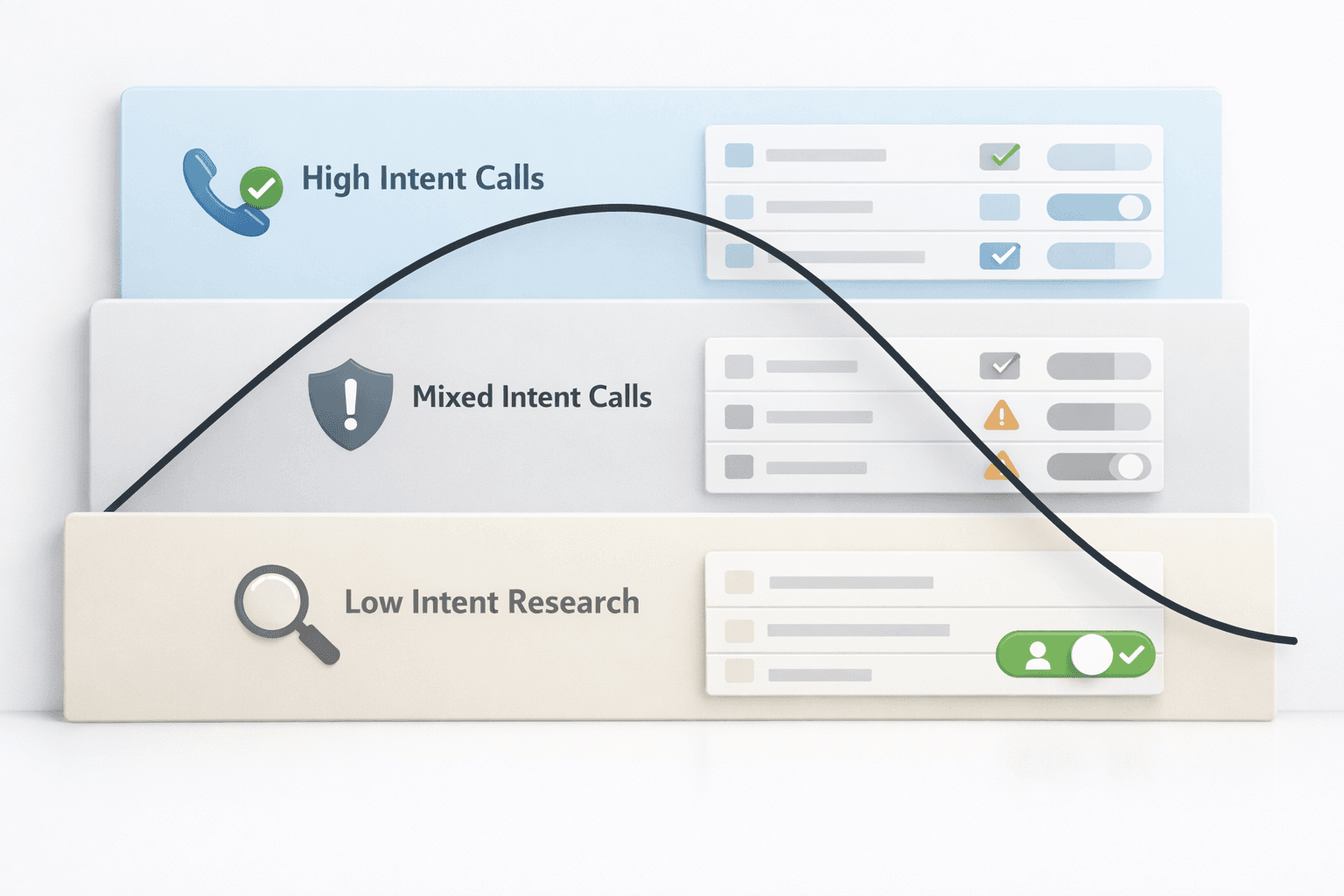
Early wins come from the obvious intent layer
Early wins usually come from a narrow slice of demand: the people already looking for exactly what you sell, in your area, ready to act. If you launch with tight keywords, clean geo targeting, and a simple conversion path, you harvest that layer quickly. Those searchers are not persuaded by your ads. They are confirmed by your ads.
That is why the first results can look amazing even with average creative and average landing pages. You are tapping an existing pocket of high intent.
Scale forces you into noisier intent layers
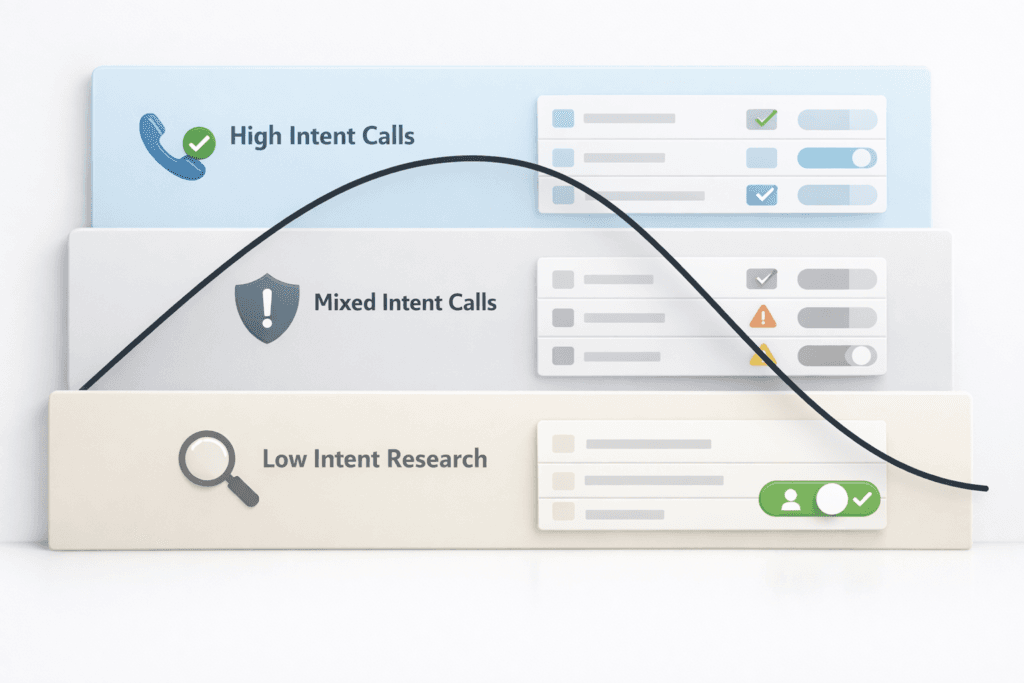
As budgets expand, you move into noisier layers. The PPC curve is the predictable shift from high intent, low noise demand into mixed intent demand. Two curves move at the same time:
• Auction dynamics: more coverage means entering auctions with different competitors, different bid pressure, and different query mixes
• Lead quality dynamics: more coverage means more searches that are adjacent to your service, not identical to it
The drift usually starts at the same points:
• Match behavior begins pulling you into marginal queries
• Search terms broaden beyond your best converting intent
• Landing pages begin to mismatch the promise in the ad
• The conversion action becomes too easy to trigger, so the platform optimizes for volume instead of quality
Miami intensifies this curve because competition is dense and ad saturation is real. Many categories are crowded with ads, map units, and directory results. When you scale, you are not just buying more clicks. You are buying into a more complex intent environment.
This article is organized around the controls that keep the curve from turning into wasted spend: intent layers, match behavior governance, measurement integrity, and lead quality controls grounded in what Google can actually measure. Google’s own help documentation is clear that call reporting and call conversion measurement have specific mechanics and limits that advertisers must understand before relying on call data for optimization.
What changed recently and why it matters now: consent driven measurement and policy tightening
Consent signals and modeled measurement are now core, not optional
A lot of performance drops are not demand drops first. They are signal drops first.
When consent is missing or inconsistent, measurement becomes more fragile. Google Consent Mode is designed to adjust how Google tags behave based on a user’s consent choices, which affects how advertising and analytics data is collected and used. In practice, that means your conversion data can become more modeled, less direct, and less stable if consent implementation is incomplete or inconsistent across pages.
That matters because optimization in Google Ads depends on conversion signals. If those signals become thinner or shift in meaning, automated bidding and learning can degrade before the business sees it clearly.
The operational takeaway is simple: consent is part of campaign architecture. It is not a legal footer. If the measurement layer is unstable, your bidding layer is unstable.
Health related and sensitive category restrictions shape remarketing and audiences
The second shift is policy pressure. Personalized advertising has restrictions for sensitive interest categories, which can limit targeting and remarketing strategies in certain verticals.
For many Miami med spa style services and health adjacent offers, that often means you cannot rely on the same audience and remarketing playbook you might use in other categories. Your creative, your landing pages, and your tracking need to do more of the work, because audience levers can be constrained.
Separately, Google’s healthcare and medicines policy highlights that some healthcare related advertising is restricted and may require certification depending on category and location. Google Help
None of this means you cannot run profitable campaigns. It means measurement and policy alignment must be treated as a first class part of the account. Many performance drops are reporting drops or optimization signal drops before they are true demand drops.
If you want a campaign architecture view that connects paid and organic measurement, the SEO services team often helps align tracking across channels so one dashboard tells the truth.
The decision framework: intent layers, match behavior, and where the curve breaks
Intent layers that should never be mixed in one ad group
The fastest way to break the PPC curve is to mix incompatible intent layers inside the same ad group and then optimize to a blended conversion.
Here are the intent layers to separate, especially in Miami categories that rely on calls and bookings:
Emergency intent
The searcher needs help now. They will call. They care about speed and coverage.
Booked service intent
The searcher wants the service soon, but not necessarily today. They compare credibility, availability, and fit.
Comparison intent
The searcher is evaluating options, prices, and differences. They often need more education before booking.
Research intent
The searcher is learning. They may convert, but the path is longer and lead quality is more variable.
When you mix these, you create reporting confusion and optimization confusion. A campaign that captures research intent can generate many low friction conversions that look great in the platform, while booked jobs decline. The algorithm cannot qualify your leads the way your front desk or dispatcher does unless you feed it that qualification signal.
Match behavior controls that prevent drift
Match behavior is not a set and forget decision. It is a governance system.
Controls that reduce drift:
• Negative keyword governance with a defined cadence
• Search term review that is frequent enough to catch new patterns
• Separation of brand, competitor, and non brand discovery
• Separation of geographic intent when city names imply different service expectations
• Tight alignment between query, ad copy, and landing page promise
Landing page fit is the most underestimated control. One promise per page. One conversion path. If a page tries to satisfy every visitor, it satisfies none, and low quality conversions rise because the conversion option is too generic.
A short refuse list that usually predicts the curve turning into waste:
• Reporting that counts leads but never qualifies them
• No search term governance commitment
• No call conversion validation plan
• No separation of intent layers and no explanation of why
For a deeper build on emergency intent structure, see Emergency intent ads for Miami trades and then come back to this article for the measurement controls that keep those campaigns honest.
If you want this framework applied to your account quickly, use the contact page and ask for an intent layer and measurement audit.
The measurement reality: what metrics lie, what metrics help, and why
The metrics that look good while revenue gets worse
In Miami PPC services, the most dangerous phase is when the dashboard improves while the business weakens.
Metrics that often mislead in this context:
• Click through rate
• Cost per click
• Blended cost per lead across mixed intent layers
• Conversions that have no qualification definition
• Total lead count without service area, service type, or booking status segmentation
These are not bad metrics. They are incomplete metrics. They can be excellent for diagnosing creative and auction dynamics, but they do not tell you if you are buying revenue.
A measurement stack that survives lead quality drift
The metrics that matter depend on the sales motion. For med spas and home services that rely on calls and bookings, the core outcome metrics tend to be:
• Qualified call rate
• Booked appointment rate
• Cost per qualified consultation
• Cost per booked job or booked consult
• Lead mix by intent layer and by service type
• Service area fit rate
The measurement stack that supports those outcomes has two layers:
Platform measurement
Google Ads can track phone calls and call reporting details when configured correctly, typically using Google forwarding numbers, and you can count calls of a specified duration as conversions.
That is a useful baseline, but it is not the finish line. Call duration is not the same as qualified intent.
Business qualification measurement
Qualification usually happens outside Google Ads, inside a CRM, booking system, or call QA process. If you do not connect qualification back to the campaign structure, the platform learns the wrong lessons.
Call conversion accuracy risks you need to audit
Most performance drops have at least one measurement leak. Common ones:
Duplicate calls
A single person can call multiple times. If you count each call as a conversion, you inflate success without increasing booked work.
Attribution windows and miscredit
If the conversion window is too loose, campaigns get credit for calls that were driven by other channels.
Spam and wrong intent calls
If your conversion definition is too permissive, spam calls or wrong intent calls can become optimization targets.
Missed calls counted as success
If the system is configured to count calls without meaningful duration thresholds or without connected call logic, you can end up rewarding unanswered calls.
Google’s documentation is explicit that phone call conversion tracking is a specific conversion tracking setup, and call reporting has defined behaviors that depend on configuration.
Now layer in consent. If consent mode is not implemented cleanly, conversion reporting can shift toward modeled behavior, which changes what the chart means.
If your reporting looks fine but bookings are down, Soaring High can audit call conversion integrity and show where the numbers stop matching reality. Start with the advertising team or go straight to the contact page.
Controls for spam, wrong intent, and duplicate demand
Controls that keep lead quality stable:
Call routing discipline
Route emergency intent differently than non emergency intent. Route sales calls differently than support calls. Do not let the front desk guess.
Missed call handling
If you miss calls, your real cost per acquisition rises even if cost per lead looks stable. Capture missed call patterns and treat them like a conversion leak.
Lead validation fields on forms
If you use forms, collect only what you will actually use to qualify. Too many fields reduce conversion. Too few fields increase junk.
CRM tagging
Tag leads as qualified or unqualified with consistent definitions. Separate wrong service, wrong location, spam, duplicate, and not ready.
Feedback loops that are systematic
Sales team feedback must be structured. Anecdotes are useful, but they are not a control system. Use a weekly reconciliation process that ties lead outcomes back to intent layers and search terms.
Google Ads can measure certain conversion behaviors, but qualification often must occur off platform, which is why the conversion measurement layer needs governance and validation beyond the ad account. Google Help
If you want help designing these controls into a paid search system, start with Soaring High’s Miami advertising services and ask for a lead quality drift audit.
Compliance and policy awareness for Miami med spas and home services advertising
Sensitive category targeting limits and remarketing constraints
If you advertise in health adjacent categories, do not assume every audience tactic is available. Google’s personalized advertising policies restrict sensitive interest categories, which affects remarketing and targeting approaches. Google Help
This forces a shift in how you build performance stability:
• More emphasis on intent separation and landing page clarity
• More emphasis on conversion integrity and qualification
• Less dependence on audience hacks as a rescue strategy
Healthcare and medicines restrictions and certification awareness
Some healthcare and medicines related advertising is restricted, and Google notes certification requirements for certain categories such as prescription drug services, with location specific restrictions. Google Help
For med spas, the practical takeaway is not to panic. It is to treat policy review as part of creative and landing page governance. Many performance drops begin as disapprovals, limited eligibility, or reduced audience capabilities, then show up as lead quality drift.
Call recording and consent awareness for Florida operations
If you record calls for quality control, training, or dispute resolution, you need a consent aware process. Florida statute 934.03 includes language that it is lawful for a person to intercept a wire, oral, or electronic communication when all parties have given prior consent, with specific exceptions for law enforcement contexts.
This article is not legal advice. The operational recommendation is to treat call recording policy as part of campaign operations and consult counsel for your implementation specifics.
If you want your paid search operations aligned to policy and measurement realities, begin with Soaring High’s advertising team.
FAQ
Why did my Miami Google Ads cost per lead go up suddenly?
The most common causes are query mix drift and measurement drift. Query mix drift happens when match behavior and scaling pull you into lower intent searches. Measurement drift happens when conversion definitions, call reporting settings, or consent driven measurement changes alter what gets counted as a conversion. Start by reviewing search terms by intent layer and validating that call conversions are defined in a way that filters out low value calls.
Why are my Google Ads leads lower quality than last month?
Lower quality is usually a segmentation problem, not a traffic problem. If emergency intent, booked service intent, and research intent are mixed, the platform optimizes to volume. Separate intent layers, tighten landing page promises, and implement lead acceptance criteria with CRM tagging so you can see where the drift starts.
What causes good CTR but bad leads in paid search?
CTR measures engagement with the ad, not fit to your service. High CTR with bad leads often means the ad is attracting broad curiosity or price shoppers, or the ad promise does not match the landing page. The fix is not just new copy. It is intent separation, search term governance, and conversion integrity checks.
Do phone calls from Google Ads count as conversions automatically?
Not automatically. Phone call conversion tracking requires setup, and call reporting and conversion measurement depend on configuration choices such as minimum call duration and the use of Google forwarding numbers for certain call assets and ad formats.
Why does Google Ads show conversions but my booking calendar is empty?
Because a conversion can be a proxy event, not a booked outcome. If your conversion action counts short calls, duplicate calls, or low intent form fills, the platform can show conversions while bookings fall. Audit conversion definitions, validate call quality, and reconcile CRM outcomes weekly.
Can med spas use remarketing and audience targeting on Google Ads?
Often yes, but there are restrictions. Google’s personalized advertising policies restrict sensitive interest categories, and some healthcare and medicines related advertising has additional limitations or certification requirements depending on the category and location. Build your strategy assuming audience levers may be constrained, and rely more on intent structure and landing page clarity.
Should I separate emergency and non emergency keywords in one campaign?
Yes, in most cases. Emergency intent behaves differently. People call faster, expectations are different, and operational handling matters more. Mixing emergency and non emergency demand often creates lead quality drift and reporting confusion. For a Miami specific structure, review emergency intent ads for trades and apply the measurement controls from this article.
For help auditing your Google paid search stack end to end, start with Soaring High’s advertising services and align measurement across channels using the SEO services team.
Closing: clear next step without hype
The PPC curve in Miami is not a mystery. Early wins come from obvious intent. Scaling forces you into noisier intent layers. If measurement is fragile, lead quality is undefined, and intent layers are mixed, performance drops are predictable.
The fix sequence is also predictable:
Measurement integrity first
Confirm call reporting, call conversion definitions, and consent driven measurement stability.
Optimization second
Only optimize once you trust what the conversions represent.
Operational controls always
Lead acceptance criteria, routing, and weekly reconciliation keep the curve from turning into wasted spend.
If your cost per lead is climbing, Soaring High can audit tracking, lead quality, and auction segments to identify what changed and correct it. Use the contact page or start from the advertising agency service page.